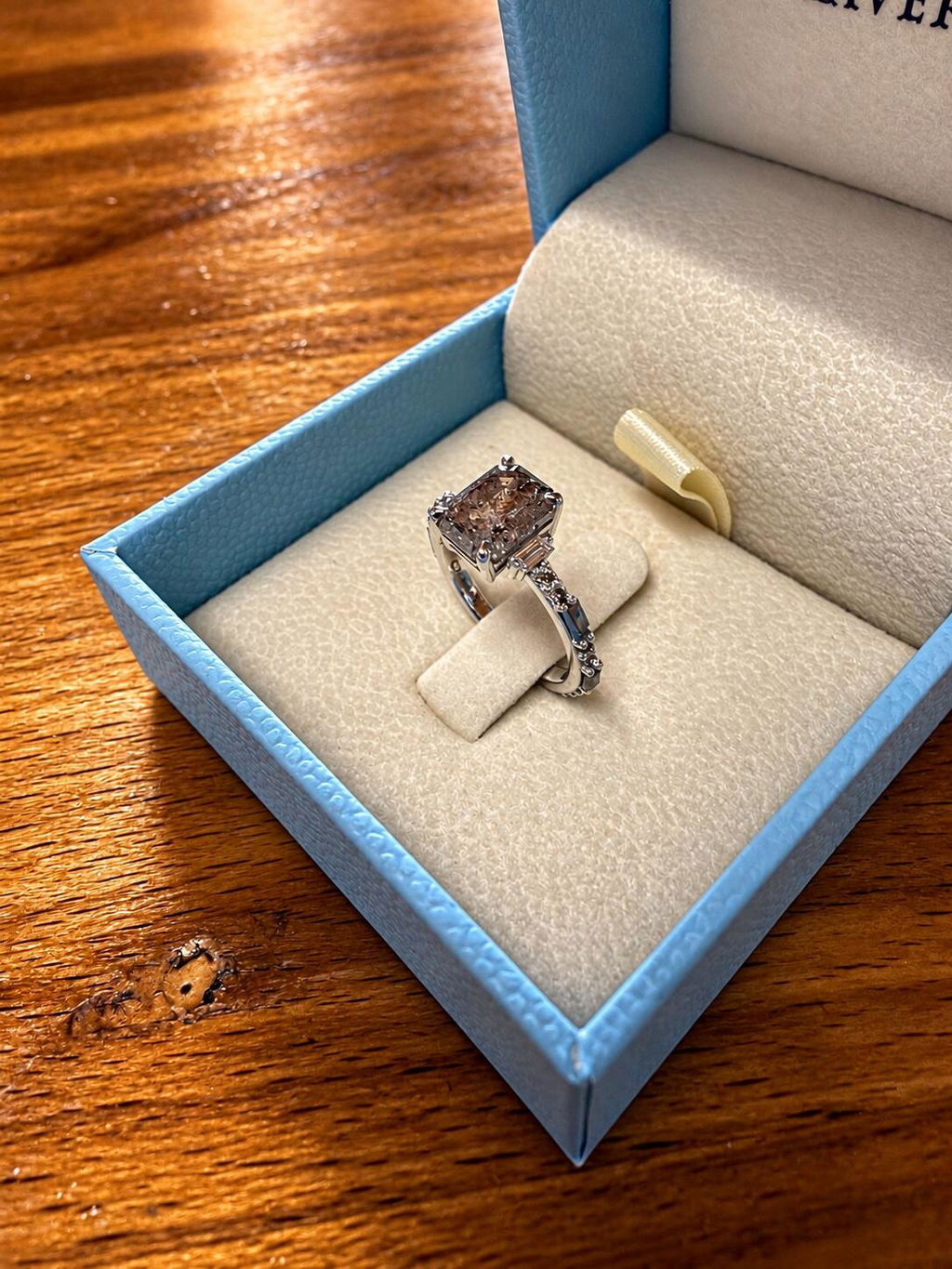
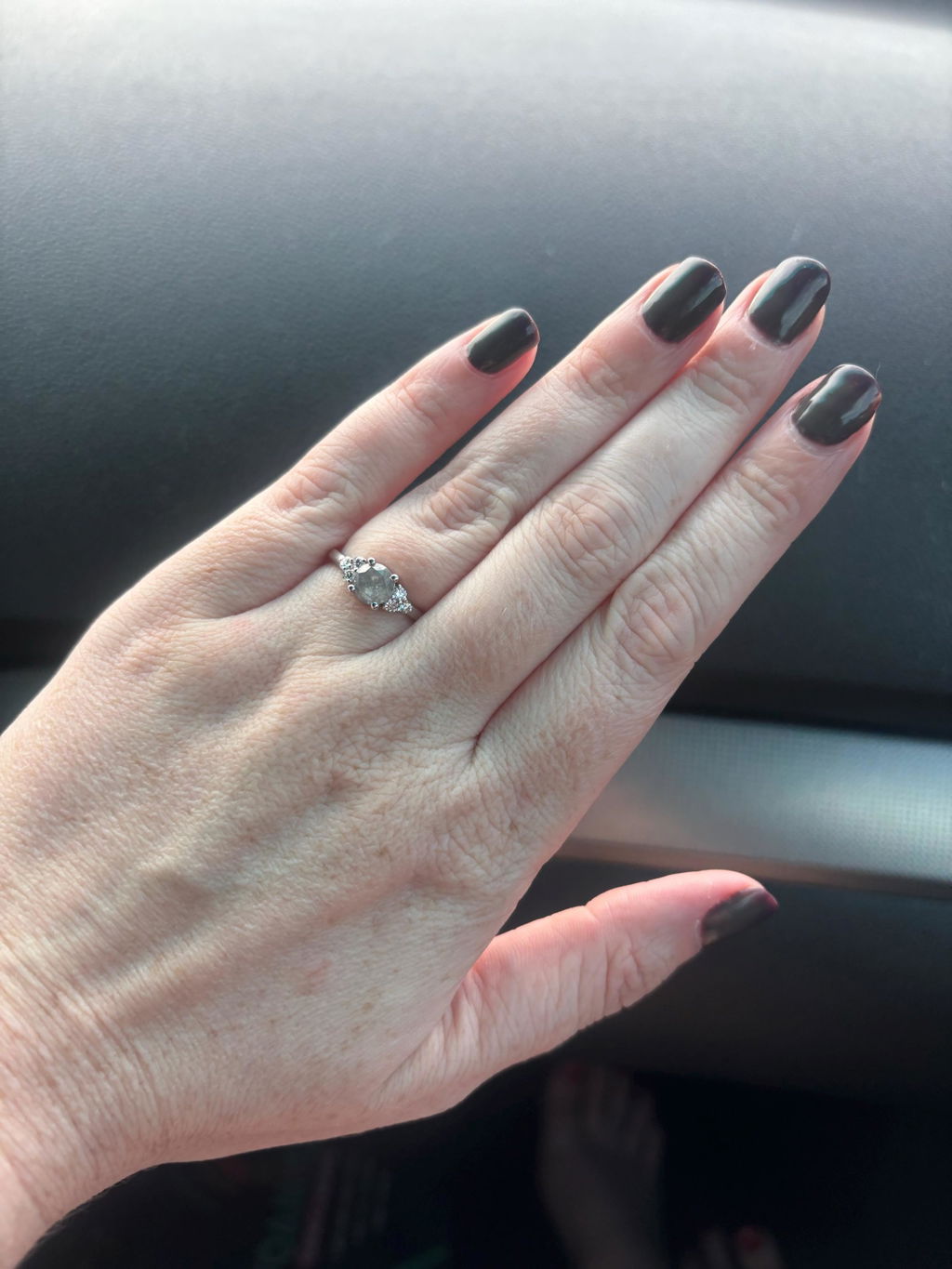
Dutch Marquise Engagement Rings
Architectural Art Deco Geometry in Handcrafted Lab Diamonds & MoissaniteStep away from conventional silhouettes with our handcrafted Dutch Marquise engagement rings. Defined by six crisp, architectural facets and tapered points, the Dutch Marquise merges vintage Art Deco geometry with dramatic finger-lengthening brilliance.
Each piece in this collection is custom-crafted in our workshop in solid 14k gold, 18k gold, or platinum, set with your choice of certified DEF lab-grown diamonds or conflict-free moissanites. Engineered with reinforced V-prongs, protective bezels, and low-profile cathedral shanks, our designs ensure this rare, angular cut delivers maximum daily durability alongside striking, individual elegance.
Frequently Asked Questions
What is a Dutch Marquise cut?
A Dutch Marquise (often certified as a Hexagonal Modified Brilliant) is an elongated hexagonal cut characterized by straight, parallel sides and four angled facets that meet at sharp points. It combines the elongating profile of a traditional marquise with crisp, geometric Art Deco lines
How does a Dutch Marquise differ from a traditional Marquise?
A classic marquise features curved, boat-shaped (navette) outer edges. In contrast, a Dutch Marquise eliminates all curved outlines in favor of six straight, sharp architectural borders, giving it a structured, modern-antique aesthetic with high brilliance.
Can I choose between Lab-Grown Diamonds and Moissanite?
Yes. Most designs in this collection are available with either an IGI-certified VVS/VS lab-grown diamond or an ultra-clear, hand-selected D-color moissanite, allowing you to select the stone that best fits your preference and budget
Can I customize the metal, ratio, or setting orientation?
Absolutely. We handcraft all settings in yellow, rose, or white solid gold (14k/18k) as well as 950 platinum. We can also mount the stone in a contemporary East-West (horizontal) orientation or source a specific length-to-width ratio upon request
Will a Dutch Marquise ring sit flush with a wedding band?
Yes. Our solitaire and cathedral settings are engineered with an elevated bridge so standard straight wedding bands can slide directly underneath and sit flush. For low-profile bezels or bezel-set Dutch Marquise rings, we offer matching contoured, curved, or chevron (V-shaped) wedding bands designed to trace the tapered points seamlessly without rubbing
Does a Dutch Marquise diamond look bigger than a round diamond?
Yes, significantly. Because the Dutch Marquise features an elongated shape (typically a 1.70:1 to 1.95:1 ratio), its carat weight is distributed over a broader surface area rather than deep in the stone’s pavilion. A 1.50-carat Dutch Marquise diamond often has the face-up finger coverage of a 2.00-carat traditional round brilliant
Do Dutch Marquise diamonds show a bow-tie effect?
All elongated fancy cuts can exhibit varying degrees of shadow across their center. However, because our Dutch Marquise stones feature specialized hexagonal modified brilliant faceting and strict cut depth calibrations, light leakage is minimized to deliver crisp, even sparkle and eliminate dark, dead center zones
What wedding band goes with a Dutch Marquise engagement ring?
Pairing depends primarily on the setting's basket height:
- High-Set & Cathedral Mounts: Designed with an elevated bridge, allowing standard straight diamond pavé or plain solid gold bands to slide underneath and sit completely flush.
- Low-Profile & Bezel Mounts: Pair seamlessly with contoured (curved) bands that trace the stone’s straight sides, or pointed chevron (V-bands) that nest snugly around the tapered tip without leaving a gap.
- Tiara & Crown Bands: Pointed tiara bands featuring alternating marquise, pear, or round lab diamonds echo the Art Deco geometry of the center stone, creating a vintage bridal stack.
Can a Dutch Marquise diamond be set East-West?
Yes. Mounting a Dutch Marquise horizontally (East-West) across the band creates an architectural, contemporary look that emphasizes the cut's parallel straight edges. East-West settings are especially popular in full or half-bezels because the band directly shields both pointed tips from side impacts, making it an exceptionally durable choice for everyday wear.
What is the best length-to-width ratio for a Dutch Marquise?
While personal preference guides the silhouette, ratios fall into three distinct aesthetic profiles:
- 1.50 to 1.65 (Broad & Balanced): Features a wider center belly and softer taper, maximizing facet width and edge-to-edge brilliance.
- 1.70 to 1.90 (The Classic Sweet Spot): Delivers the most balanced elongation—flattering and slenderizing the finger while maintaining crisp, defined hexagonal borders.
- 1.95 to 2.10+ (Dramatic Elongation): Creates an ultra-slender, striking silhouette with maximum finger length coverage per carat.
What is the difference between a Dutch Marquise and an Elongated Hexagon?
While both shapes feature six straight outer edges, they differ in their terminal geometry and faceting:
- Tip Geometry: A Dutch Marquise terminates in two sharp, pointed ends (mirroring a marquise outline drawn with straight lines). A traditional elongated hexagon typically terminates with flat, blunt ends.
- Faceting Style: Dutch Marquise stones are cut with modified brilliant faceting (certified by IGI as a Hexagonal Modified Brilliant) to generate continuous sparkle and light return. Most standard elongated hexagons feature step-cut faceting, producing long, parallel "hall-of-mirrors" reflections similar to an emerald cut.